Monday, April 13, 2009
Buenos amigos of the Cruz Roja (Red Cross)
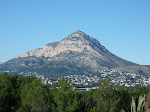
Given that Javea had a disproportionate population of EU expats, it was often hard to get to know the locals. One of the most valuable and rewarding experiences for me personally was to sign up with the local Javea Red Cross. They had just started up a new environmental program, called Medio Ambiente, with the purpose of improving and preserving the local environs around Javea. This group was made up of a handful of young people (30-somethings), all with a common love and passion for the outdoors. For me it was a perfect opportunity to meet and connect with other like-minded individuals, practice my spanish and get out to see everything Javea had to offer. We met in the evenings on a weekly basis to begin building a "business plan" for how to care for the various parks and trails in the area by hosting montly cleanup days. I learned a great deal about budgets and local politics (particularly the region of Alicante versus the national directives) and did my best to keep up with my colleagues when they would break into passionate, rapid-fire dialog, often reverting to Valenciano, a dialect I could not speak and barely understood. Often during the weekends, we would go off on hikes to document areas that had been degraded or worn due to heavy use in the hopes of convincing others to support and fund our cleanup and preservation effort. We would also attend lectures from local park guides in Denia, who would give fasciating lectures about the geology and flora and fauna of the area. Raul was the ring-leader of this effort, and his dedication and tireless efforts to make Javea a better place were an inspiration to me. Plus he was a good friend, who would go out of his way to include me in conversations and invite me along various excursions. Other key people included Lorena - the organizer driving the effort through the Red Cross, as well as other local volunteers like Jordi, Marco, Santi, Johanna, and Bianca. Everyone was incredibly friendly and would go out of their way to bring me in to their conversations and make sure I was understanding what they were saying. All in all, it was a fascinating group of people and an amazing experience. Through the Cruz Roja, I have made some wonderful life-long friends and I look forward to following their future endeavors to keep Javea beautiful.

Sunday, April 12, 2009
Semana Santa - Domingo de Pascua (Easter Sunday)
 Today is Easter Sunday, marking the end of Holy Week (Semana Santa) in Spain. While the most significant Santa Semana celebrations take place in Andalucia (primarily Seville) and central Spain, several towns in the province of Valencia also host their own local versions. In particular, the mountain town of Pego hosted a number of processions throughout the town this entire week. I took the opportunity to see the final procession in Pego, which celebrated the moment when the Virgin Mary is reunited with her resurrected son for the first time.
  The procession began with two different parades leaving from different churches, one carrying a statue of the Virgen Mary and one carrying the risen Jesus.
  Each procession slowly wound its way through town with bands following -marching slowly to the beat of trumpets and drums - and culminated when the two statues were carried triumphantly into the town square to reunite.
 The bands then bursted into the "Hymn of Alegria", with children throwing caramelos and adults throwing flower petals at the statues. Of course, no festival in Spain would be complete without a mascleta (firecracker show) to cap off the celebration, and then the townspeople gathered up and returned to their respective parishes to celebrate Easter Mass.
  While the easter bunny is not well known in Spain (although he did make a surprise visit to our villa this morning - quite a feat considering the distance he had to travel!), the locals tend to spend the rest of the day with family, often heading down to the beach after mass to fly cometas (kites) and later enjoying a tarta de mona (a sweet pastry with a whole egg in the center) or a tarta de pasas y nueces (raisin and nut cake). For us, tarta de nueces was the hands-down winner of the day.
Sunday, March 22, 2009
Las Fallas, Day 2 - Burn, baby, burn!
 After a few precious hours of sleep, we hit the streets, looking at the many floats across town and searching for breakfast (which was pretty much over now that it was noon!). I managed to find a vendor selling "bunoles de calabaza", a very traditional pumpkin fritter covered with sugar, which helped me temper my stomach from the night before. We then made our way back to the Ayunamiento to see the mascleta again - but this time up close. We got there early and positioned ourselves about a block away from the plaza so as not to go completely deaf from the explosions. This time the mascleta delivered and we could feel the shock waves from the powerful explosions and we all roared in approval.
  Satisfied, we went out in search for lunch and took a nice leisurely 3 hours. We then all went down to the Plaza de la Virgen to see the flower offerings, which were brought by representatives from each neighborhood to adorn a giant wooden statue of the virgen mary with child looking down somewhat sadly onto the plaza. We stopped to look at a few more floats before heading back to the hotel for a final "descanso" (rest) before the big finale - la crema, or the burning of the floats - signifying the end of Las Fallas for another year.
At about 11 pm, we headed back to Juanjo's falla, where there was already a huge crowd lined up. The main intersection was completely blocked off by a metal fence on all four sides of the street, so the crowds could not get in to close.
Satisfied, we went out in search for lunch and took a nice leisurely 3 hours. We then all went down to the Plaza de la Virgen to see the flower offerings, which were brought by representatives from each neighborhood to adorn a giant wooden statue of the virgen mary with child looking down somewhat sadly onto the plaza. We stopped to look at a few more floats before heading back to the hotel for a final "descanso" (rest) before the big finale - la crema, or the burning of the floats - signifying the end of Las Fallas for another year.
At about 11 pm, we headed back to Juanjo's falla, where there was already a huge crowd lined up. The main intersection was completely blocked off by a metal fence on all four sides of the street, so the crowds could not get in to close.  But before we knew it, Juanjo was waving us in and we found ourselves right in the middle of the intersection with front row views of the falla, which was now heavily laden with explosive fireworks. We were all looking at each other in shock - how did we get so lucky? Only the workers and their families were supposed to be on this side of the fence, but somehow, there we were. Suzanne asked Juanjo if he was sad to think that his piece of art would be burned and his answer was perfect; "when you cook a beautiful meal, are you sad to see people eat it? The burning is simply the final step in the process..."
The floats started burning across the city at midnight but the larger ones were saved for last.
But before we knew it, Juanjo was waving us in and we found ourselves right in the middle of the intersection with front row views of the falla, which was now heavily laden with explosive fireworks. We were all looking at each other in shock - how did we get so lucky? Only the workers and their families were supposed to be on this side of the fence, but somehow, there we were. Suzanne asked Juanjo if he was sad to think that his piece of art would be burned and his answer was perfect; "when you cook a beautiful meal, are you sad to see people eat it? The burning is simply the final step in the process..."
The floats started burning across the city at midnight but the larger ones were saved for last.  Nothing happened for about an hour until suddenly there was a roar from the crowd behind the fence and a fire truck slowly backed up to take position next to the float. The crew of firemen, or bomberos, laid out their hoses and spread out along the intersection. Amazingly, we were still standing only 10 meters from the float and nobody seemed to pay much attention to us. But we heeded the advice of others and started to move back, as apparently these suckers can get pretty hot.
 Then the fallera (young girl representing this float for the neighborhood) stepped up and was given a ceremonial lighter to light the first firework. There were a short series of bursts as fireworks shot into the air in increasing numbers. Soon the very top of the float caught fire and within seconds, the whole thing lit up. The bomberos started hosing down the trees and buildings along the intersection as the heat began to get intense. We kept walking backward away from what was now a huge tower of fire.
  Finally, the structure burned through and collapsed and people started inching closer again to see the last remains of the float burn to the ground. It was amazing to think that a year's worth of work was gone in a matter of minutes - by choice! Fortunately, a small section of Juanjo's creation was selected to be displayed at the Fallas museum (the pope piece), so all was not lost forever. It was truly an amazing spectacle. As the crowds dispersed, we could see the cleanup crews already working away - within a few hours, all traces of 700 burnt floats would be completely removed and the town would be back to normal, as if nothing had transpired over the past nights and weeks.
  We laughed to think about what it would take to pull something of this scale off in the United States. Perhaps Burning Man comes close - but try doing it with 700 floats in a major metropolitan city! Event planners could certainly learn a thing or two from the Spanish! Scott and I joked that the whole process represented a sort of "organized chaos". It was crazy and insane, but somehow everything ran smoothly, people remained nonchalant and civilized and it never felt out of control or dangerous. Well, except for those "borrachos"...
 ."viva Espana"! We will forever be grateful to Vincent and his wife Nancy, and Scott and Dee, and all the new friends we met over this whirlwind 40 hours who helped make this an experience we will never forget.
Saturday, March 21, 2009
Las Fallas, Day 1 - The Fallas and Night of Fire
 From there we headed out into the streets and marveled at the amazing light displays down every street and at the fallas (or floats), which were strategically positioned at major intersections across the city. "Hey, whatever happened to la crisis?!?!" We were told that there were over 700 in all across Valencia, some very small and some over 5 stories high. Vincent casually mentioned that he had a cousin who had worked on some of the fallas and took us to see him. We were astonished to walk down one of the prettiest lit-up streets, Sueca, to find a spectacular falla and Vincent's cousin grinning proudly underneath.
  Vincent's cousin was Juanjo Garcia, one of the Falla Mayores - the master artist/builder of the fallas. Turns out his FULL TIME JOB was to design and supervise the construction of these incredible pieces of art. He gave us a detailed tour of this particular falla (he designed 9 across the city) and told us how it was constructed. Each falla is designed in a satirical, cartoonish manner and often mock or highlight various ills of our society.
  As Juanjo described, tomorrow night's burning of these Fallas represents an act of cleansing or purifying these ills. It was fascinating to learn about these amazing creations and see them "up close and personal".
Then we were off to a local Spanish restaurant to meet Vincent's other cousins, who actually turned out to be very close childhood friends. Having dinner reservations in advance was critical, as Valencia tripled in size to over 3 million people. We met Paco, Rafa, David and their families for a boisterous, fun and filling traditional spanish meal. All the better, because we were struggling to stay up until 2 am for the Nit de Foc (night of fire) fireworks show, and this dinner certainly woke us up.
As Juanjo described, tomorrow night's burning of these Fallas represents an act of cleansing or purifying these ills. It was fascinating to learn about these amazing creations and see them "up close and personal".
Then we were off to a local Spanish restaurant to meet Vincent's other cousins, who actually turned out to be very close childhood friends. Having dinner reservations in advance was critical, as Valencia tripled in size to over 3 million people. We met Paco, Rafa, David and their families for a boisterous, fun and filling traditional spanish meal. All the better, because we were struggling to stay up until 2 am for the Nit de Foc (night of fire) fireworks show, and this dinner certainly woke us up.  We also got a great chance to speak Spanish with the locals and even Suzanne was talking like she knew what she was saying! Before we knew it, it was already 1 am and we had to quickly scramble to get over to the fireworks show in time.
The Nit de Foc was truly a spectacle. Kind of makes our 4th of July shows look like watered-down kids sparklers. The only way I can describe it was the biggest finale times 5 that seemed to run for half an hour nonstop. The explosions were bigger and the colors were brighter and it was visually stunning to watch. I think we are now forever doomed as any firework shows in the future will pale by comparison and our kids will ultimately tire of us saying: "you think this is cool, let me tell you about the firework show we saw in Valencia way back in '09..."
But then things got really interesting.
We also got a great chance to speak Spanish with the locals and even Suzanne was talking like she knew what she was saying! Before we knew it, it was already 1 am and we had to quickly scramble to get over to the fireworks show in time.
The Nit de Foc was truly a spectacle. Kind of makes our 4th of July shows look like watered-down kids sparklers. The only way I can describe it was the biggest finale times 5 that seemed to run for half an hour nonstop. The explosions were bigger and the colors were brighter and it was visually stunning to watch. I think we are now forever doomed as any firework shows in the future will pale by comparison and our kids will ultimately tire of us saying: "you think this is cool, let me tell you about the firework show we saw in Valencia way back in '09..."
But then things got really interesting.  As soon as the fireworks ended, people ran out into the street from down in the river bed/park. We stood there and watched, somewhat confused until we realized that the park was filled with teenagers armed with "borrachos" a special explosive that lets of flares of sparks and flies like an angry bee in a completely random pattern before exploding with a huge bang. If one of these is behind you while you are running, people say it will follow your backdraft and you will be the unlucky recipient of one of these explosions.
  Scott and I were like little kids, venturing out towards the river bank as the polvos were being launched all around us. We couldn't believe that this was legal and wasn't being broken up by the police. It was a crazy battleground out there and when one of the polvos got a little too close for comfort, we decided to call it a night and head back to the hotel.
Las Fallas, Day 1 - Mascleta and Bull Fighting
 Scott, Dee, Suzanne and I rolled into the Valencia train station and headed straight to the Ayunamiento for the Mascleta (firecracker spectacle). The crowds were already piled high in the streets and we didn't make it very far before having to stop and see it from afar. However, the weather was warm, the skies were clear and we were in high spirits. When the Mascleta went off, there was a huge roar from the crowd, but overall our first experience was somewhat underwhelming because we were too far away to feel and hear the full effect of over 60 kg of explosives. So after checking into our hotel and grabbing a quick bite to eat, we walked back through the town towards our first event, a real bullfight at the Plaza de Torros.
 Now first a bit of commentary on bullfighting. While there are certainly many passionate arguments for and against this spectacle, Suzanne and I don't really have a strong opinion either way, and we treated this simply as an opportunity to experience a distinctively Spanish tradition. So we went in with an open mind and perhaps a slightly morbid curiosity. We met Vincent, Nancy and Chally there and Vincent gave us a great overview of how it was all to play out, from the initial viewing of the bull in action, the picadors, the bandilleros to the final act alone with the matador. There were three matadors that day - Julio Aparicio, Alejando Talavante, and Daniel Luque, all of whom would be fighting two bulls. I was surprised at how small the bullring was, but the simple understated decor of the bullring was offset by the spectacularly colorful and glistening uniforms of the matadors and their support team. For me, I experienced a very wide range of emotions while watching this - at some times very disturbed and queasy at the cruelty and perversion, yet at other times awestruck at the beauty, pageantry and grace of the matadors in a cautious dance with these incredibly powerful bulls.
  It certainly helped to have Vincent there to comment on the subtleties of each matadors' performance and strengths/weaknesses of each bull so we could appreciate the event more fully. I won't say I have now become a fan of bullfighting, but this was definitely an experience that I will never forget.
Inside Las Fallas - INSANE!!!!
 Unexpected. Unreal. Unbelievable. That's our experience of Las Fallas summed up in 3 words. 40 hours of amazing non-stop visual and audio overload. A day later, Suzanne and I are still shaking our heads in amazement, wondering if it all really happened. They claim that Las Fallas is the biggest festival in Spain and we would wholeheartedly agree. Given my unfortunate labeling as the "festival chaser" of Javea, it was incredibly satisfying to experience the mother of all festivals -
  Las Fallas incorporated everything that is good about the festivals we have seen before and then ramped everything up 10-fold - floats, religious processions, floral offerings, bullfights, neighborhood block parties (on EVERY block), streetlights, fireworks, explosions, bonfires - you name it! And everything was done on a scale we have never seen before and will probably never see again. Even the Spanish call Las Fallas a "festival on steroids". For any of you who feel the need to have a bucket list, I would most definitely put this down as something to experience at least once in your lifetime. I'm putting it down ...twice.
 It all started fairly inconspicuously. I had booked a hotel room for a few nights so we could have a place to crash, but we really didn't plan much more beyond that. We had read several not-so-flattering stories about huge crowds, traffic jams, and injuries from firecracker explosions, so we were a bit hesitant to go at first. Fortunately, our good friends Scott and Dee Andrews were able to find a baby sitter and decided to come along with us. Their friends Vincent, Nancy and Chally from Boulder were coming out that week and we all decided to meet up in Valencia. We came to learn that Vincent had grown up in Valencia and was quite dialed-in to the scene there.
  What we didn't realize was that he turned out to be the best festival host ever, with a full two day itinerary fully mapped out, allowing us to experience Las Fallas as if we were local insiders. It was an amazing and completely unexpected experience that we'll likely never be able to duplicate.
Sunday, March 15, 2009
A Taste of Andalucia - Jaen
 Our last stop on our tour of Andalusia took us to Jaen, a city noted for its vast olive groves and Moorish and Renaissance influence. Sitting at the base of the Sierra de Jabalcuz, Jaen is dominated by an impressive fortress, the Castillo de Santa Catalina and has a stunning Catedral.
  The catedral was built by Andres de Vandelvira, one of the key architects of Spanish Baroque style and dominates the old town. Inside the catedral there is a capilia which reportedly claims to house one of the veils used by Saint Veronica to wipe Christ's face when he died. During our visit, we local workers were dismantling some of the altars in preparation for Semana Santa (Easter Holy week),
  where the many figures from the catedral would be solemnly paraded through the town on large platforms (carried by groups of 40-50 men each) during Holy Thursday and Good Friday. The amount of work leading up to Semana Santa was quite impressive. Then it was up to the Castillo de Santa Catalina, where part of the castle had been converted to a Parador, a state-run chain of hotels in historic and unusual venues. The parador towered over the city of Jaen and offered fantastic views of the catedral and town below as well as the blue-tinged mountains, with endless rows of olive groves,
  marking this area as the top producers of olive oil in Spain. Inside, the parador retained the feel of living in a medieval castle, but with all the comforts of the modern world. Unfortunately, I had come down with some sort of gastric illness, but at least my folks had the opportunity to enjoy a fabulous multi-course dinner at the Parador. The next morning, we wrapped things up and made our way back to Javea.
  Reflecting on this trip, it was definitely a full itinerary, but not overwhelming. It was also great to be able to share this experience with my parents, so that they could see another facet of Spain, particularly that of the Moorish influence. But now it was time to head home, as Suzanne and I had only a day left before we were off to las Fallas in Valencia...
Subscribe to:
Posts (Atom)